NASA's Artemis II Crew Launches To The Moon (Official Broadcast)
https://www.youtube.com/watch?v=Tf_UjBMIzNo
NASA’s first crewed mission under the Artemis program, Artemis II, will send NASA astronauts Reid Wiseman, Victor Glover, Christina Koch, and CSA (Canadian Space Agency) astronaut Jeremy Hansen on an approximately 10-day journey around the Moon. Countdown begins no earlier than 6:24 pm EDT on April 1, with backup dates on April 2, 3, 4, 5 and 6. Launch coverage begins at 12:50 pm on NASA+, Amazon Prime, and YouTube. April 1, 2026.
|
ACSP Nuclear Launch Seminar
https://acsp.space/nuclear/
The Association of Commercial Space Professionals and the Nuclear Energy Institute are hosting a one-day training event designed for professionals at the intersection of space and nuclear sectors. Get a comprehensive overview of the regulatory, technical, and safety frameworks governing the launch of nuclear power sources, including jurisdictional processes, launch licensing, insurance and indemnification, safety analysis methodologies, and more in several sessions. $250-$580. Washington, DC. April 2, 2026.
|
6th Annual Assured PNT Summit
https://pnt.dsigroup.org/
This year’s Assured Positioning, Navigation, and Timing Summit brings together leaders from the military, federal government, industry, and academia to collaborate in town hall-style discussion on the advancement of resilient US PNT services that are available for pertinent applications across the United States. Speakers include US Space Force Vice Chief of Space Operations Gen. Shawn Bratton and USSF Director of Force Structure, Resources, and Assessment Lt. Gen. Steven Whitney. $790-$1490. Washington, DC. April 7-8, 2026.
|
41st Space Symposium
https://www.spacesymposium.org/
Global space professionals alongside hundreds of exhibitors and speakers come together to explore critical space issues and drive innovation across the space industry. $0-$3,560. Colorado Springs, CO. April 13-16, 2026.
|
2nd International Conference on Gravitation, Astrophysics and Cosmology
https://astrophysics2026.conplusmeetings.com/
The conference brings together global researchers who share an interest in gravitation, astrophysics and cosmology as a challenge to explore the structure of space and time, as well as how coherence, order, and complexity emerge across all systems. The featured SpaceLand Workshop “Weightless Visions” gathers participants to engage with cutting-edge scientific perspectives and hands-on microgravity research experiences. $199-$1099. Paris, France. April 16-18, 2026.
|
Arizona Space Congress
https://spacerising.org/
Space Rising aligns government, industry, and academic leaders through live discussions, collaborative ideations, hands-on exhibits, and experiential programming to guide statewide coordination for greater growth, investment, and industrial base development to shape the future of space. Speakers include XRDNA CEO Charles Adelman and Blue Origin RFC Systems Engineer Omar Alam. $125-$225. Phoenix, AZ. April 29, 2026.
|
USGIF GEOINT Symposium 2026
https://usgif.org/geoint-symposium-2026/
Explore the critical role of geospatial intelligence in building a secure future through discussions with industry experts, government leaders, and innovators on the intersection of technology and security and challenges and opportunities in today’s complex geopolitical landscape. Aurora, CO. May 3-6, 2026.
|
ASCEND 2026
https://www.ascend.events/
Key themes for this year's ASCEND conference include shaping space policy and law for long-term activity, sustainable cislunar and lunar exploration, the Moon-to-Mars pathway, strengthening national security, and new horizons in space infrastructure and services. Washington, DC. May 19-21, 2026.
|
CYSAT Europe
https://cysat.eu/
Billed as the world's biggest space cybersecurity event, CYSAT Europe welcomes attendees for discussions around the latest innovations, challenges, upcoming regulations, and technical demonstrations. €50-€500. Paris. May 20-21, 2026.
|
Space Tech Expo USA
https://www.spacetechexpo.com/anaheim
Space Tech's 14th expo explores key issues and opportunities within the US and international space industry, with 350+ exhibitors. Speakers include Nicholas Cialdella, CTO of Varda, and Brian Taylor, CEO of Lux Aeterna. $0-$79. Anaheim, CA. June 2-4, 2026.
|
International Space Development Conference 2026
https://isdc.nss.org/
The National Space Society's 44th annual conference theme is "Space for us all," bringing together NASA astronauts, visionaries in spaceflight, industry executives, researchers and engineers for discussions and insights around the NewSpace economy, AI and space settlement. $80-$750. McLean, VA. June 4-7, 2026.
|
Challenges | Solicitations | Resources
|
NASA Space to Soil Challenge
https://nasa-space-to-soil.org/
Prizes up to $400,000 await participants able to develop or describe improvements in how SmallSats sense, process and deliver information to enable adaptive sensing or onboard processing on missions advancing regenerative agriculture, forestry or a similar land resilience objectives. Submission Deadline: May 4, 2026.
|
2026 Deep Space Food Challenge: Mars to Table
https://deepspacefood.org/marstotable
This international competition administered by the Methuselah Foundation invites multidisciplinary teams to design complete, nutritionally sufficient integrated food systems for long-duration human missions. Solutions must operate as end-to-end systems that minimize inputs while maximizing resilience and reuse for closed-loop or near closed-loop operation. Solution summary due: May 22, 2026.
|
Add your event or campaign. Contact us for details.
|
Space Ecosystem | Startups | Deals
|
Xona $170M Series C to Accelerate Pulsar's Path to Scale
https://www.xonaspace.com/news/series-c
Xona Space Systems announced an oversubscribed $170 million Series C round to accelerate the deployment of its Pulsar commercial satellite network, a next-generation positioning, navigation, and timing (PNT) alternative to GPS with 2 cm precision. Led by Mohari Ventures and Natural Capital, with participation from Craft Ventures, ICONIQ, Woven Capital, NGP Capital, Samsung Next and others, the funding will scale production of its secure, high-accuracy LEO satellites to launch initial commercial services by 2027.
|
Airmo Earns 5 Million Euro in Seed Funding, Plans First Launch for 2027
https://www.satellitetoday.com/imagery-and-sensing/2026/03/12/airmo-earns-e5-million-in-seed-funding-plans-first-launch-for-2027/
Short-wave infrared imaging and LiDAR-powered methane leak sensor developer Airmo raised €5 million (~$5.8 million) in its seed round led by Ananda Impact Ventures, Unconventional Ventures, kopa ventures, Desai Ventures, Hypernova, and others, with participation from Antler, Findus Ventures, E2MC and Pilabs. The capital is slated for the company's transition from demonstrations to scaled commercial operations, and to establish a presence in the Middle East and North Africa. Airmo aims to launch its first satellite in Q2 2027.
|
Another Earth Raises €3.5M in Funding
https://www.thesaasnews.com/news/another-earth-raises-3-5m-in-funding
Vienna-based AI-powered simulation and synthetic Earth observation dataset developer Another Earth raised €3.5 million in funding to deploy its data engine and expand applications for environmental monitoring, biodiversity analysis, and climate risk simulation. New investor Wake-Up Capital led the round alongside Rockstart, Inovexus, and Stamco AG, with participation from Austrian Research Promotion Agency (FFG) and Austria Wirtschaftsservice (AWS).
|
Space Exploration | Development
|
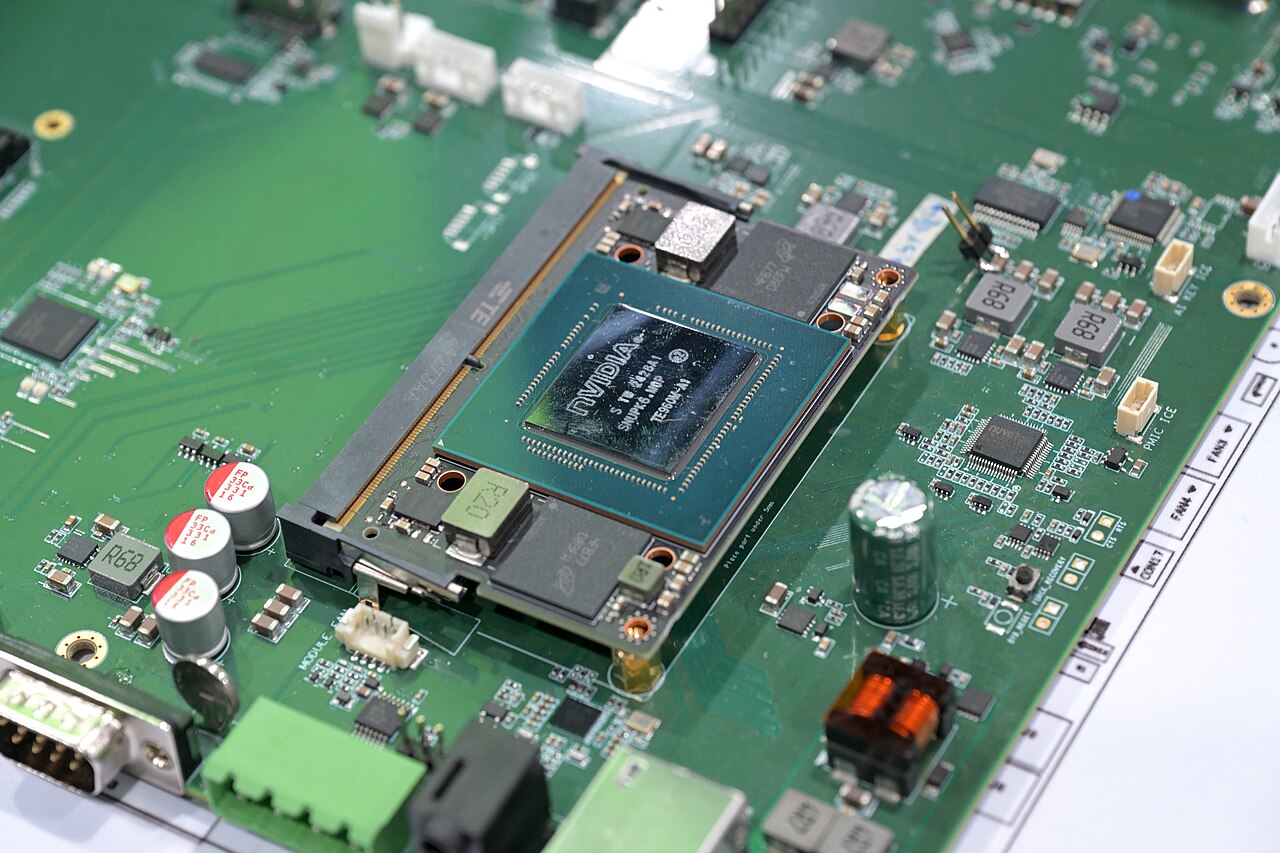
Nvidia Jetson Orin NX. Image Credits: 4300streetcar
|
Astronomy | Astrobiology | Cosmology
|
Could Life On Earth And Life On Mars Be The Same Thing?
https://www.youtube.com/watch?v=6CMckMaOY5M
Scott Manley discusses a new experiment showing that extremely resilient microbes, such as Deinococcus radiodurans (“Conan the bacterium”), can survive the intense pressures produced when asteroid impacts eject rocks into space. Unlike earlier tests where bacteria almost never survived, this organism showed high survival rates even under extreme conditions. This strengthens the case for panspermia, the idea that life can travel between planets on meteorites. The process may have been more likely from Mars to Earth, since Mars has lower gravity, was hit more often, and may have become habitable earlier.
|
|
|
|
|